
 Español
 Portugues
 Pусский
 Français
 Deutsch
 日本語
日本語 한국어
한국어 العربية
 Italiano
 Nederlands
 Ελληνικά
 Svenska
 Polski
 ไทย
ไทย Türk dili
 हिन्दी
 Indonesia
 Melayu
 Tiếng Việt
 中文
中文 dansk
dansk Magyar
 қазақ
қазақ বাংলা
বাংলা עִברִית
 čeština
 Soomaali
 မြန်မာ
 فارسی
فارسی українська
 norsk
norsk Gaeilge
 беларускі
 Română
 ພາສາລາວ
 Filipino
 lietuvių
 Cymraeg
 македонски
 Suomalainen
 slovenský
 o'zbek
 اردو
اردو հայերեն
 Igbo
Igbo български
 سنڌي
سنڌي Shona
Shona සිංහල
සිංහල Hrvatski
 íslenskur
 galego
 català
 Zulu South Africa
 Afrikaans isiXhosa
 ಕನ್ನಡ
ಕನ್ನಡ lëtzebuergesch
 Indonésia Sunda
 Кыргызча
 тоҷикӣ
 Србија
 Twi
Twi Hawaii
 Cebu
Cebu नेपाल
नेपाल euskara
 frissi
 יידיש
יידיש latvija
 slovenija
 kiswahili
 ਪੰਜਾਬ
ਪੰਜਾਬ پښتو
پښتو საქართველოს
 hua moni
 bosna
bosna Kreyòl ayisyen
 Eesti
Eesti Gàidhlig na h-Alba
 Samoa
Samoa Монгол
 Azərbaycan
 አማራ
አማራ Shqipëria
 Malagasy
 Malta
Malta ខ្មែរ
ខ្មែរ Chicheva
 中文(繁体)
 ଓଡିଆ
ଓଡିଆ Setswana
 Afrikaans
 Aymara
 Башҡорт
 Türkmenler
 ትግሪኛ
ትግሪኛ Afaan Oromoo
 অসমীয়া
 Kinyarwanda
 Ilocano
 Wolof
Wolof अवधी
अवधी Oluganda
 Bikol
Bikol Fulɓe
Fulɓe Kikongo
 Sango
Sango ދިވެހި
 Lingala
 मैथिली
 Tsonga
 ꯃꯦꯏ ꯊꯥꯏ꯫
 brezhoneg
 Furlan
 नेवा
नेवा རྫོང་ཁ
 Santali
 Аҧсуа
Аҧсуа Нохчийн
 Чӑваш
Чӑваш Татар
Татар Batak Karo
 دری
دری Diura
Diura Fengyu
 Eʋegbe
 Iban
Iban Fiji
Fiji Tonga
Tonga Inuktitut
 Nahuatl
 maaya yucatec
 Runasimi
 guarani
 Qafar
Qafar Acholi
 Dinka
Dinka Luo
Luo Lundi
Lundi isiNdebele
 Tshivenḓa
 Sesotho sa Leboa
 Sesotho sa Borwa
 Ndumbe
 Papuan Pidgin
 Rromani ćhib
 Thok Nath

Flexible coupling
A flexible coupling is a mechanical component used to connect two shafts in a power transmission system while allowing for a small amount of misalignment, vibration, and movement. Its main purpose is to transmit torque from one shaft to another efficiently, while reducing stress on the connected equipment. Unlike rigid couplings, flexible couplings can accommodate slight angular, parallel, or axial offset between shafts, which helps protect machines from damage and improves overall performance.Flexible couplings are widely used in many industries, including manufacturing, energy, mining, pumps, compressors, conveyors, and industrial machinery. In real applications, perfect shaft alignment is often difficult to achieve due to installation tolerances, thermal expansion, foundation settlement, or operational movement. A flexible coupling helps compensate for these conditions, preventing excessive wear on bearings, seals, and shafts.There are several common types of flexible couplings, each designed for specific operating conditions. Some use elastomer elements such as rubber or polyurethane to absorb shock and dampen vibration. Others use metal components like springs, discs, or grids to provide flexibility while maintaining high torque capacity. Gear couplings and jaw couplings are also popular in heavy-duty systems. The choice of coupling depends on factors such as torque, speed, alignment tolerance, environmental conditions, and maintenance requirements.One of the key advantages of a flexible coupling is vibration reduction. Machines operating at high speed or under fluctuating loads can generate significant vibration, which may shorten equipment life. By absorbing shock loads and dampening oscillations, a flexible coupling helps create smoother operation and reduces noise. This leads to improved reliability, lower maintenance costs, and longer service life for connected components.Another important benefit is protection against overload and misalignment. If a machine experiences sudden load changes or minor installation errors, the coupling can reduce the impact on the drive system. This makes flexible couplings especially valuable in systems where downtime is costly or equipment must run continuously.Flexible couplings are also designed to be easy to install and maintain. Many models can be replaced without moving the entire machine, which simplifies servicing. However, proper selection and installation are essential. If the coupling is too small, it may fail under load; if it is too large or too stiff, it may not provide enough flexibility. Regular inspection is recommended to check for wear, cracking, lubrication issues, or element fatigue.In summary, a flexible coupling is an important part of modern mechanical drive systems. It connects shafts, compensates for misalignment, absorbs vibration, and protects equipment from damage. By improving reliability and reducing maintenance needs, flexible couplings play a vital role in efficient and long-lasting industrial operation.
Products
Category:
-
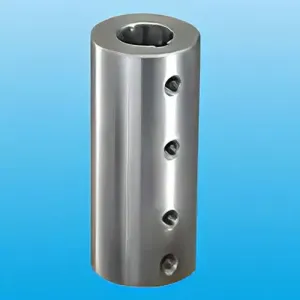
power transmission set screw flexible threaded split rigid coupling
Category: CouplingBrowse number: 192Number:Release time: 2026-10-15 20:29:17In the field of industrial machinery, the seamless operation of mechanical components is crucial. One of the key factors in ensuring smooth operation of machinery is the use of rigid couplings.
News
Category:
No search results found!
Case
Category:
No search results found!
Video
Category:
No search results found!
Download
Category:
No search results found!
Job
Category:
No search results found!
Featured Products
No search results found!



 WhatsApp
 Phone
Phone